

EKHO detects and locates drones by their acoustic signature, including autonomous or wire-guided flight, invisible to radio detection.
For Seveso sites, ports and sensitive infrastructure, alongside your existing systems.
RF detection systems rely on emissions produced by the drone, its remote control, or their communication link. When a device no longer has an exploitable radio signature (particularly with a fiber-optic link), this method loses its main observation signal.
The drone remains a physical object, though: it can be observed by radar, optical and thermal imaging, and heard. EKHO uses this last channel as an additional passive detection layer.
The radio link between the pilot and the aircraft is exactly the signal these systems are looking for, and find.
The control link runs through the optical fiber. No radio emission: RF systems have nothing to intercept. The propeller noise, though, remains audible.
EKHO isn't meant to replace radar, RF or optronics. Acoustics adds an independent, passive, complementary detection channel, consistent with a multi-layered counter-drone architecture.
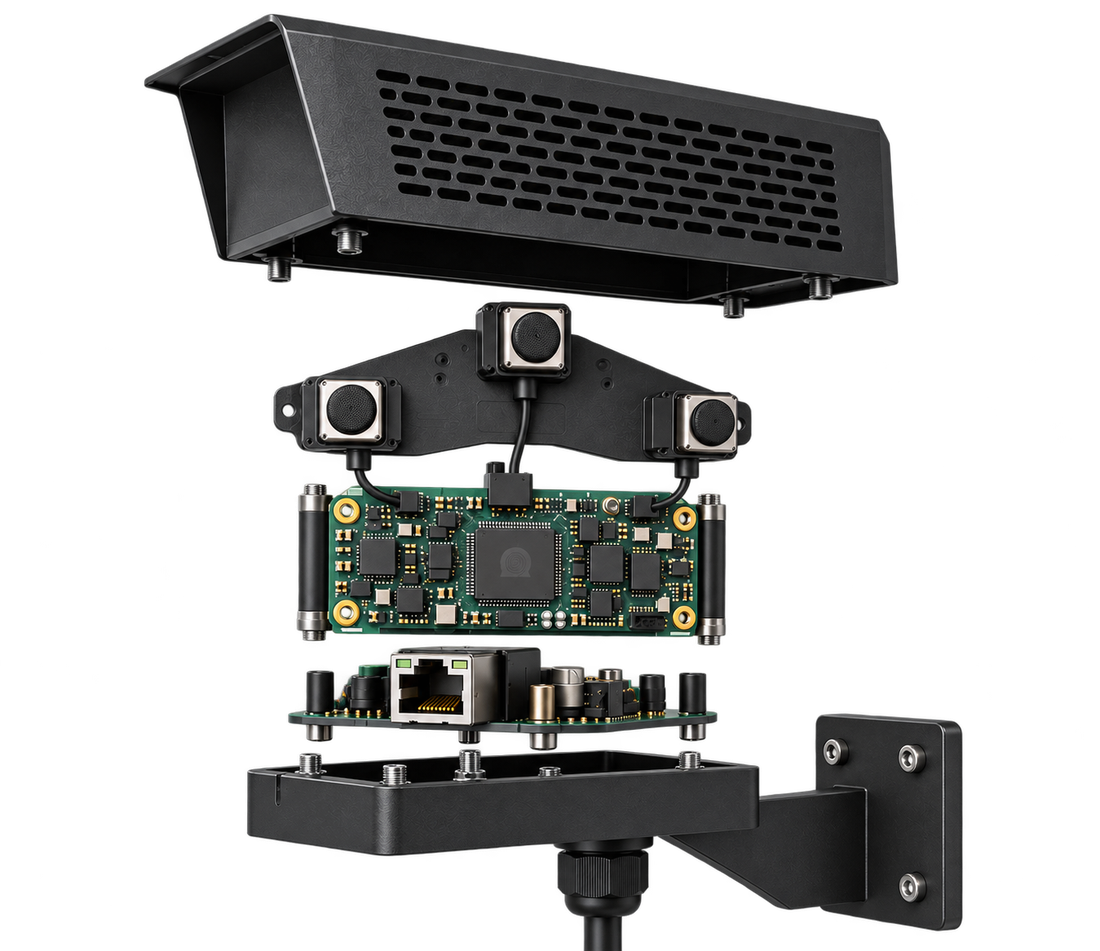
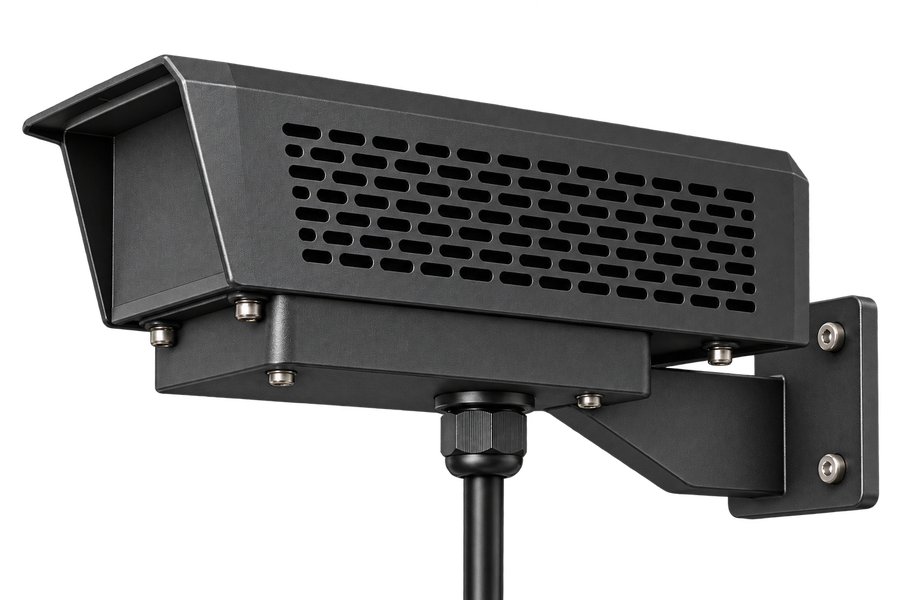
An outdoor unit that listens, processes locally and alerts, without depending on a radio signal that, on modern fiber-optic drones, may never exist.
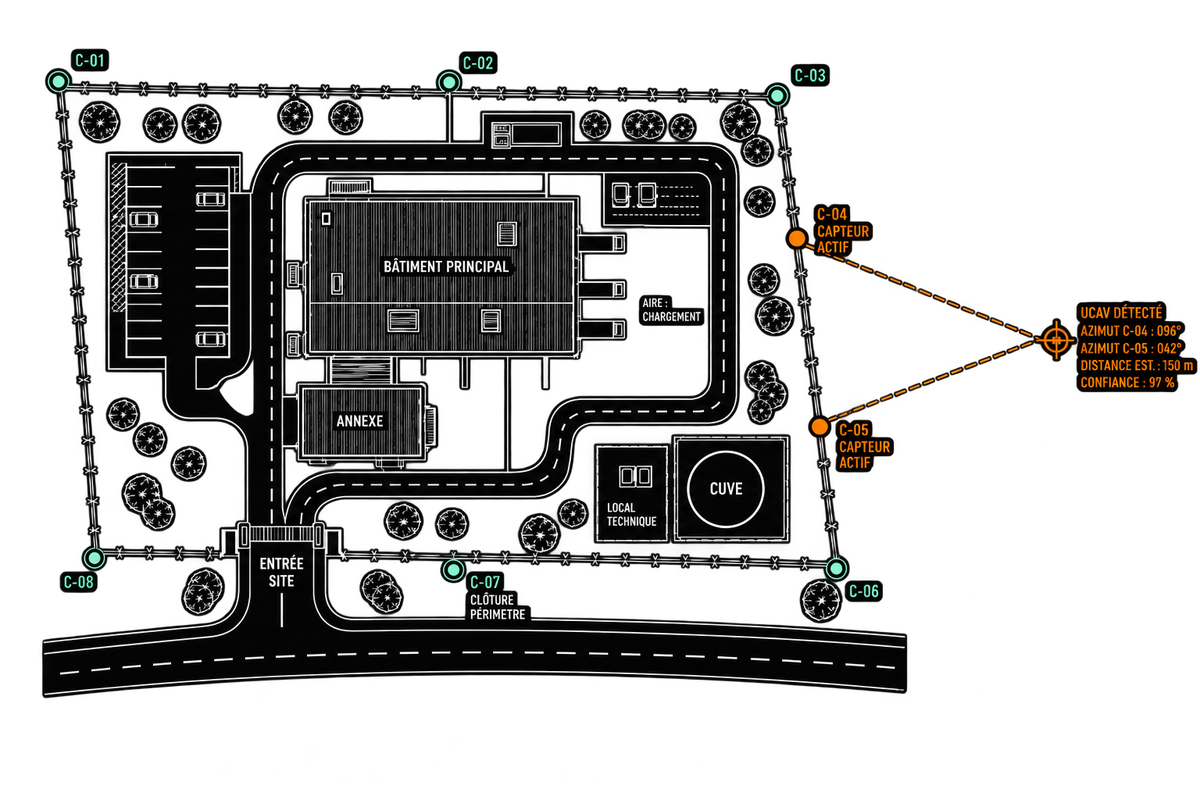
| Environment | Range | Limiting factor |
|---|---|---|
| Rural, low noise | 120 – 150 m | Wind, wildlife |
| Peri-urban | 80 – 110 m | Traffic, human activity |
| Noisy industrial site | 60 – 90 m | Machinery, ventilation |
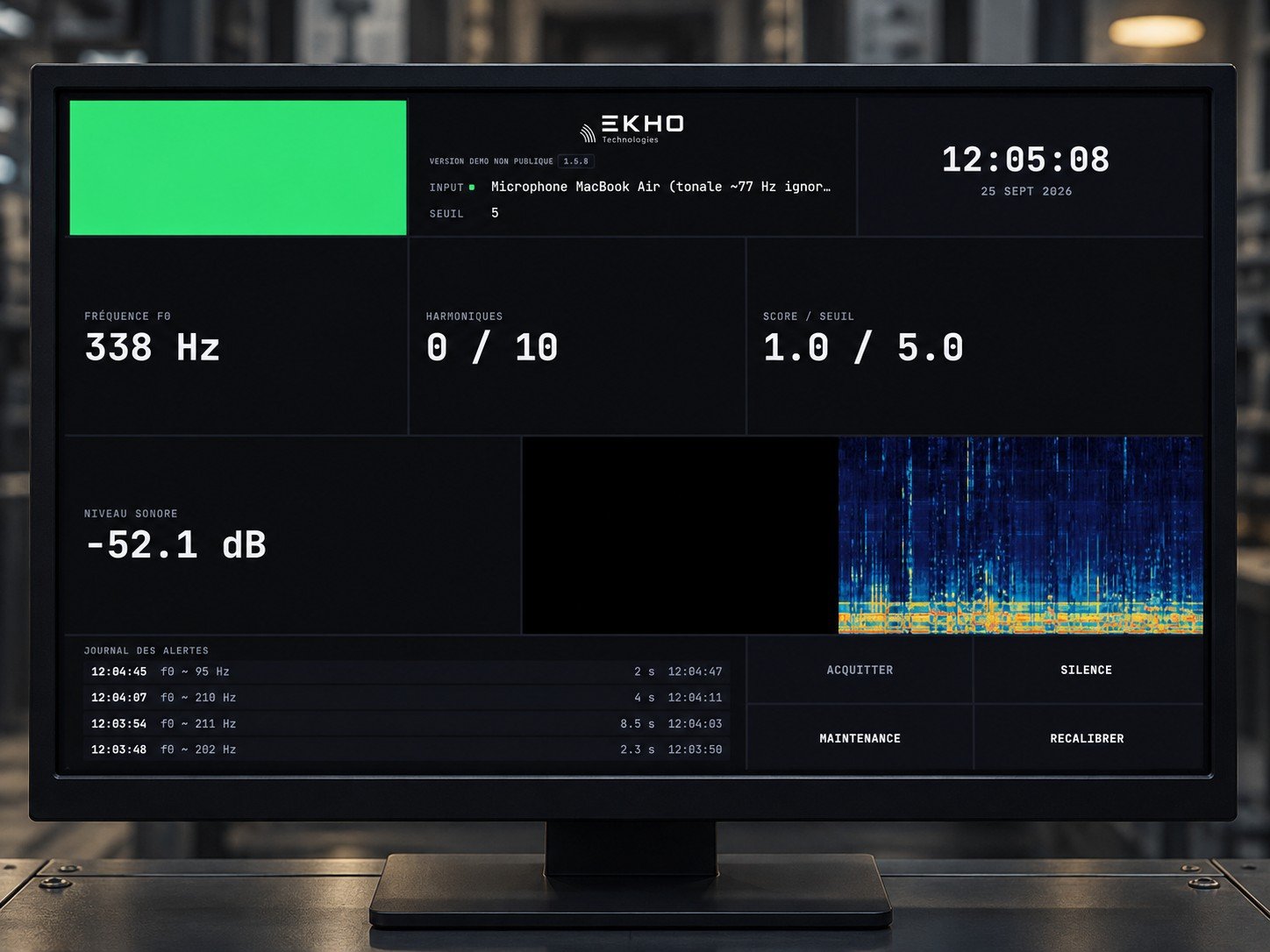
Sensors detect. The console turns their detections into decisions.
Each detection appears instantly, with the drone's direction plotted on your site plan.
One sensor or twenty, a single interface to monitor your entire perimeter.
Every event is logged, searchable and exportable for your analysis and reporting.
The console runs on your own network, with no cloud. Your data never leaves your site.
Every site has its own procedure. EKHO gives it what it's missing: knowing a drone is coming, from where, and keeping a record.
EKHO alerts your security post as soon as a drone is heard. Your teams trigger the response planned for your site, whether that's a visual check, taking shelter, or reporting it to the authorities.
The drone's direction is shown in real time. Your agents know where to look, and if you have motorized cameras, they can point there automatically.
Time, direction and duration of each event are logged and exportable, for your internal review, your insurer, or a police report.

Road traffic, ventilation, machinery, port activity, wind: industrial environments like Fos–Étang de Berre bring together precisely the conditions in which acoustic detection must prove its robustness. EKHO is currently seeking partner sites across France for its first field validation campaigns.
Fully controlled development, with no dependency on a foreign cloud for detection.
Analysis happens inside the unit. Raw sound never leaves it.
Only the metadata and signatures needed for detection are retained.
An architecture designed to ease works-council consultation and GDPR compliance.
Drones have changed warfare. They're already changing security at European sites. At EKHO, we build sensors that can hear what other systems can't see: a challenge of physics, algorithms and fieldwork, with a direct impact on protecting critical infrastructure.
Our sensors already run in the field. You'll join a small team with real say over the product.
Recognize a drone in the noise of the world: wind, traffic, machinery.
Fit that intelligence into an autonomous, rugged unit, with no cloud.
Open the first Seveso sites, ports and critical infrastructure.
The drone threat is advancing faster than the means to defend against it. EKHO is preparing its first funding round to move from a site-validated prototype to a product deployable at scale.
Your profile isn't listed? Write to us anyway.
Let's talk →A question, a project, a partnership idea? Write to us, we get back to you within 12 business hours.
Form not working? Write directly to contact@ekho-technologies.com.